Anthocyanins: Dr Hussain on the emerging research Into brain and cognitive health
Dr Hussain discusses anthocyanins, naturally occurring compounds in purple and red fruits, and explores emerging research into their potential role in supporting cognitive function and metabolic health during his appearance on Steph’s Packed Lunch.
Dr Hussain's key insights from the video
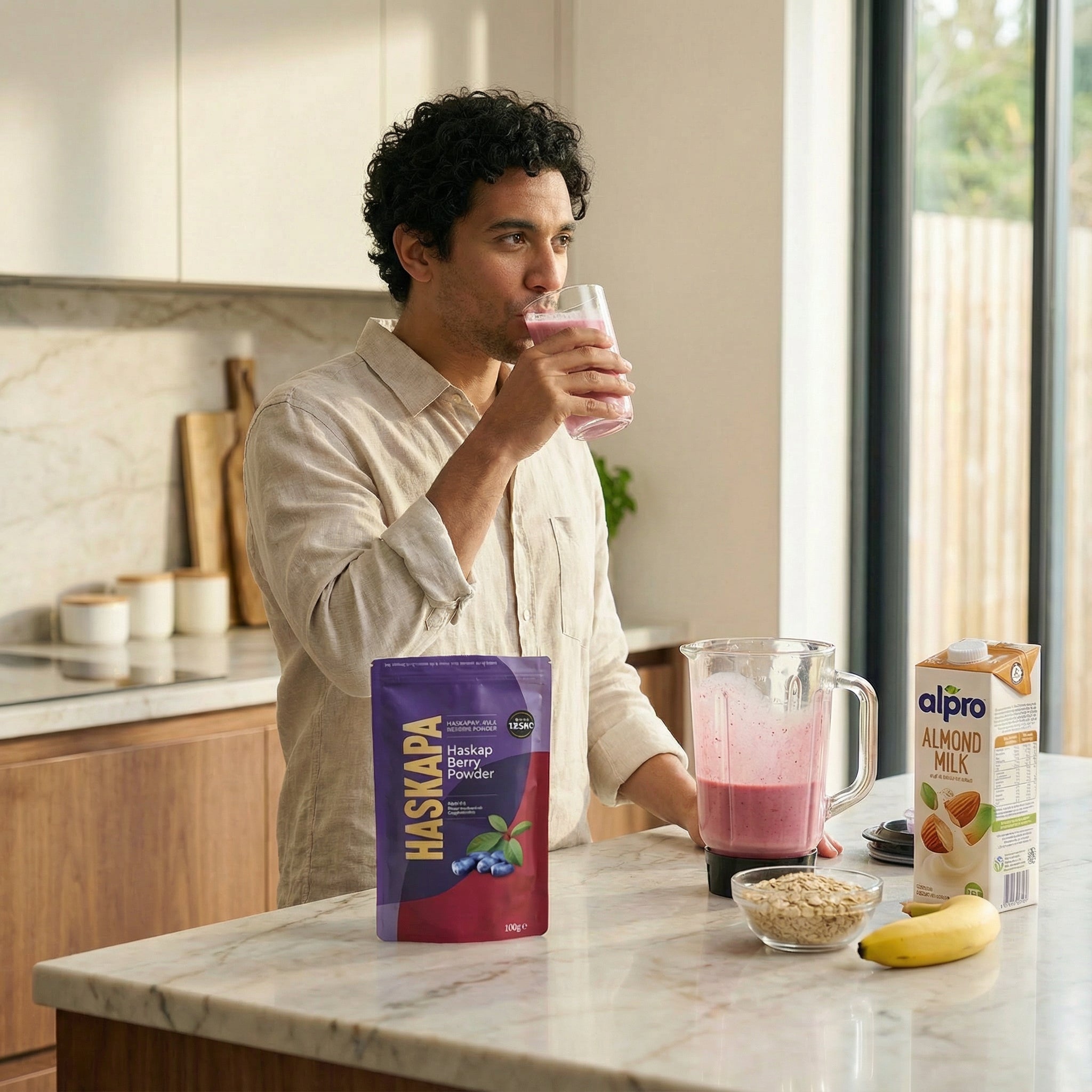
Dr Hussain discusses a study on middle-aged, overweight individuals—the highest dementia risk group—using freeze-dried strawberrypowderdaily, which improved mood and memory recall. He emphasises how this aligns with prior research on anthocyanin-rich foods such as haskap berries and blueberries. Dr Hussain highlights Haskapa berry powder for its high anthocyanin content and he personally takes it daily in his morning shake.
Anthocyanins are a type of polyphenol that give many fruits and vegetables their red, purple and blue colours. They’re widely studied for their antioxidant properties, and are found in foods such as blueberries, blackberries, red grapes, cherries, red cabbage and haskap berries.
Haskap berry powder: top anthocyanin source
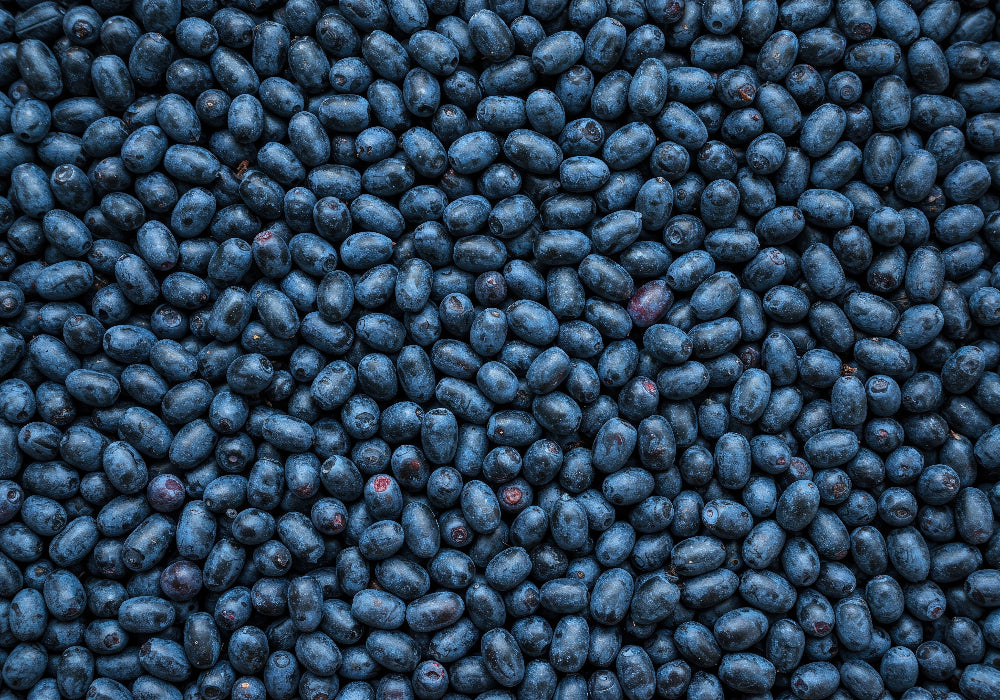
Haskap berries, pack high anthocyanin levels—up to four times more than blueberries—making haskap powder an easy, potent way to increase intake. A simple spoonful mixes into shakes for a daily boost.
Anthocyanins are the subject of ongoing research into how they may influence different processes in the body, including those linked to cognition and metabolism. Haskap berries are a naturally rich source of these compounds.
Although there is still no agreed daily intake value for anthocyanins, a recent review paper recommended that we eat 50mg anthocyanins per day. Most people in northern European countries, including the UK consume much lower amounts. So, taking just one to two teaspoons of Haskap Berry Powder, each day will give you your daily anthocyanin boost.
Our product collection
Haskapa Superfood Berry Powder
An easy-to-use powder with a naturally concentrated berry profile, blending easily into yoghurt, porridge, and smoothies.
Crafted from unique violet-tinted glass, this jar is more than just stylish. Its special design blocks out harmful light and moisture, keeping your berry powder fresh and protected.
1. Gołba M, Sokół-Łętowska A, Kucharska AZ. Health properties and composition of honey- suckle berry Lonicera caerulea L. An update on recent studies. Molecules. 2020;25(3):749.
2. Shimoyama Y, editor. The hascup – An introduction. Hokkaido Government, IBURI Subprefectural Office, Department of Industrial Promotion, Agricultural Affairs Division; 2008. Available from: http://www.iburi.pref.hokkaido.lg.jp/ss/num/hasukappu.htm
3. Thompson MM. Introducing haskap, Japanese blue honeysuckle. J Am Pomol Soc. 2006;60(4):164–8.
4. Rupasinghe HPV, Arumuggam N, Amararathna M, De Silva ABKH. The potential health benefits of haskap (Lonicera caerulea L.): Role of cyanidin-3-O-glucoside. J Funct Foods. 2018;44:24–39.
5. De Silva ABKH, Rupasinghe HPV. Polyphenols composition and antidiabetic properties in vitro of haskap (Lonicera caerulea L.) berries in relation to cultivar and harvesting date. J Food Compos Anal. 2020;88:103402.
6. Igwe E, Charlton K, Probst Y. Usual dietary anthocyanin intake, sources and their association with blood pressure in a representative sample of Australian adults. J Hum Nutr Diet. 2019;32:10.1111/jhn.12647.
7. Kalt W, Cassidy A, Howard LR, Krikorian R, Stull AJ, Tremblay F, Zamora-Ros R. Recent research on the health benefits of blueberries and their anthocyanins. Adv Nutr. 2019 Jul 22;nmz065. https://doi.org/10.1093/advances/nmz065
8. Cassidy A, Mukamal KJ, Liu L, Franz M, Eliassen AH, Rimm EB. High anthocyanin intake is associated with a reduced risk of myocardial infarction in young and middle-aged women. Circulation. 2013;127(2):188–96.
9. Cassidy A, Bertoia M, Chiuve S, Flint A, Forman J, Rimm EB. Habitual intake of anthocyanins and flavanones and risk of cardiovascular disease in men. Am J Clin Nutr. 2016;104:587–94.
10. Cassidy A, O’Reilly ÉJ, Kay C, Sampson L, Franz M, Forman JP, et al. Habitual intake of flavonoid subclasses and incident hypertension in adults. Am J Clin Nutr. 2011;93(2):338– 47.
11. Devore EE, Kang JH, Breteler MM, Grodstein F. Dietary intakes of berries and flavonoids in relation to cognitive decline. Ann Neurol. 2012;72(1):135–43.
12. Ahles S, Joris PJ, Plat J. Effects of berry anthocyanins on cognitive performance, vascular function and cardiometabolic risk markers: A systematic review of randomized placebo- controlled intervention studies in humans. Int J Mol Sci. 2021;22(12):6482.
13. Jacques PF, Au R, Blumberg JB, Rogers GT, Shishtar E. Long-term dietary flavonoid intake and risk of Alzheimer’s disease and related dementias in the Framingham Offspring Cohort. Am J Clin Nutr. 2020. doi:10.1093/ajcn/nqaa079.
14. Biswas D, Sarkar S, De Silva ABKH, D’Souza K, Kienesberger P, Rupasinghe HPV, Pulinilkunnil T. Cyanidin-3-O-glucoside rich extract from haskap berry improves glucose homeostasis and insulin sensitivity in diet-induced obese mice. Can J Diabetes. 2018;42(5):S55. doi:10.1016/j.jcjd.2018.08.16.
15. Bell L, Williams CM. A pilot dose–response study of the acute effects of haskap berry extract (Lonicera caerulea L.) on cognition, mood, and blood pressure in older adults. Eur J Nutr. 2018. doi:10.1007/s00394-018-1877-9. https://doi.org/10.1007/s00394-018-1877-9
16. Howatson G, Snaith GC, Kimble R, Cowper G, Keane KM. Improved endurance running performance following haskap berry (Lonicera caerulea L.) ingestion. Nutrients. 2022;14(4):780. doi:10.3390/nu14040780. https://www.haskapa.com/pages/haskapa-and-sports-research