

What are Honeyberries?
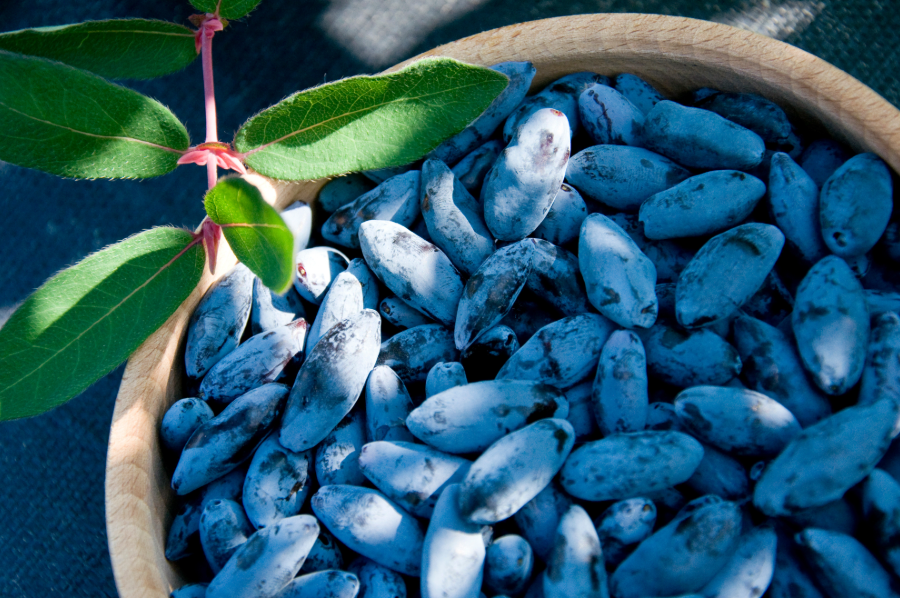
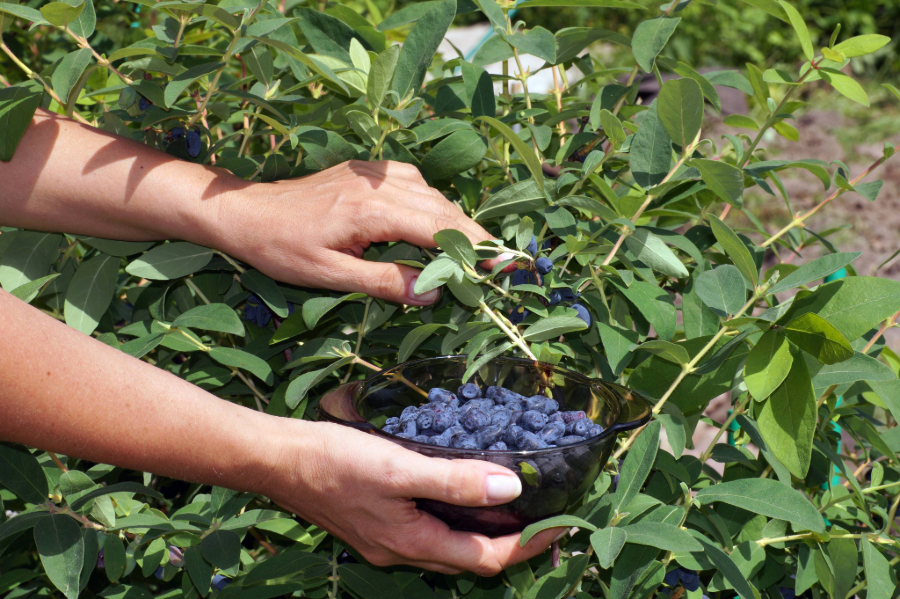
Honeyberry (haskap) is a small, elongated blue fruit that grows on hardy shrubs in cool climates. It resembles a stretched blueberry and has a distinctive sweet‑tart flavour often described as a mix of blueberry, raspberry, and blackcurrant.
The fruit comes from the species Lonicera caerulea, an edible member of the honeysuckle family. Unlike ornamental honeysuckle, honeyberry plants produce highly nutritious berries suitable for fresh eating and food production.
Key facts:
- Also called haskap, blue honeysuckle, or sweetberry honeysuckle
- Native to northern regions of Europe, Asia, and North America
- Extremely cold‑tolerant and easy to grow
- One of the earliest fruits to ripen each year
Honeyberries vs blueberries
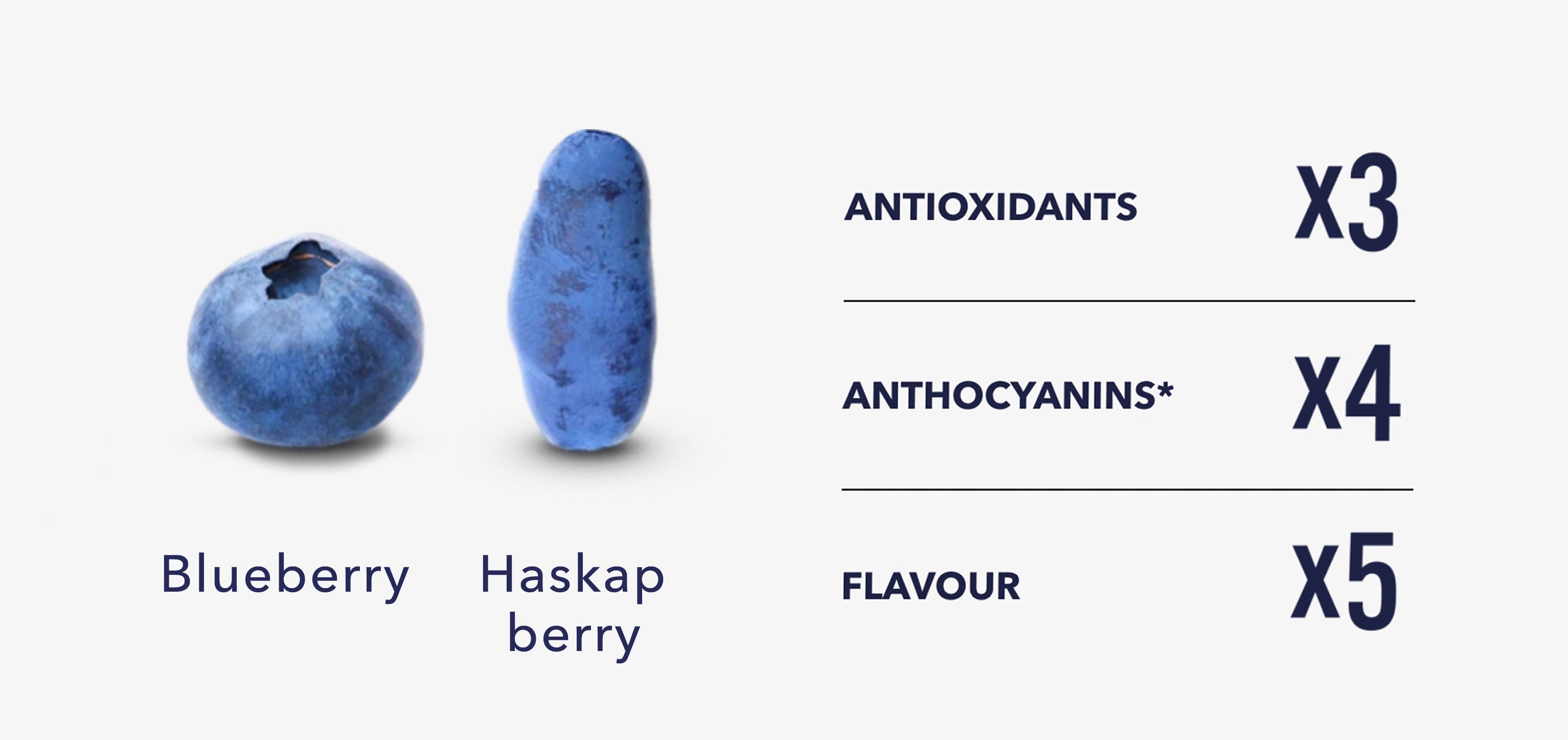
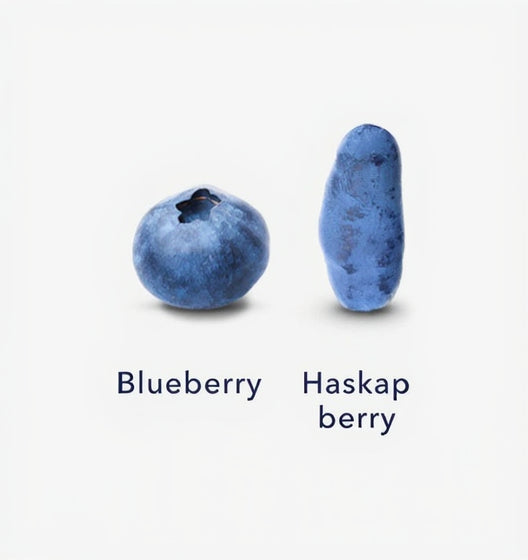
Many people ask how honeyberries compare to blueberries. While both are blue berries rich in antioxidants, honeyberries have several unique characteristics.
Honeyberry vs blueberry differences:
- Shape: Honeyberries are elongated; blueberries are round
- Taste: Honeyberries are more complex and tangy
- Harvest time: Honeyberries ripen earlier in the season
- Colour inside: Honeyberries are deep purple/red throughout
- Cold tolerance: Honeyberries withstand much colder temperatures
Because of these differences, honeyberries are often considered a premium or specialty berry.
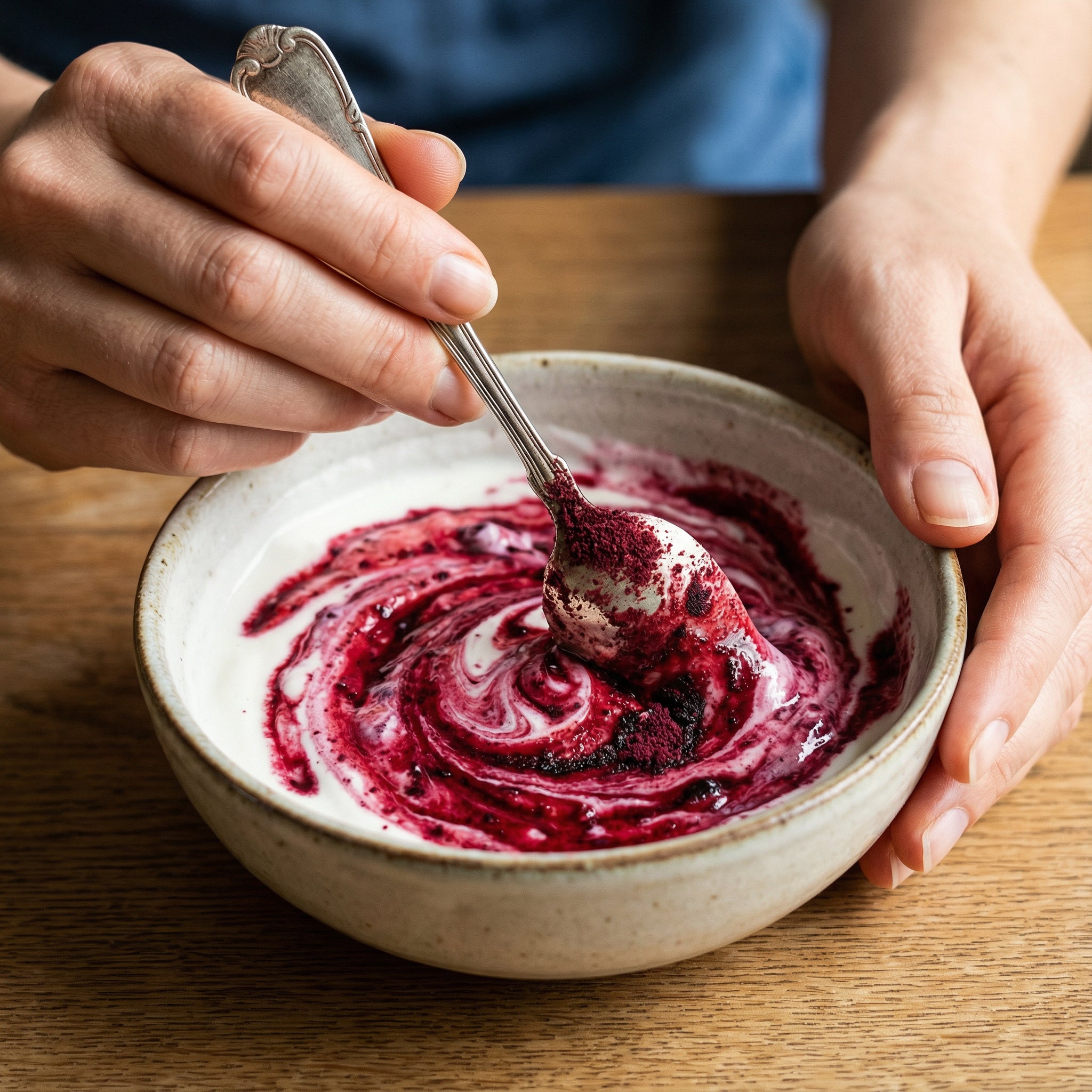
What do Honeyberries taste like?
Fully ripe honeyberries are juicy with a balanced sweet‑tart flavour. Many describe the taste as a blend of:
- Blueberry
- Raspberry
- Blackberry
- Blackcurrant
Underripe fruit can be quite tart, so timing the harvest is important. When picked at peak ripeness, the flavour is rich, refreshing, and slightly wine‑like.
Honeyberry nutrition
Honeyberries are widely promoted as a superfruit because of their high levels of beneficial nutrients and plant compounds.
Key nutrients in honeyberries
- Vitamin C
- Dietary fibre
- Polyphenols
- Anthocyanins (powerful antioxidants)
- Essential minerals
Anthocyanins are the natural pigments responsible for the deep blue‑purple colour of the fruit. These compounds are associated with supporting overall health as part of a balanced diet rich in fruits and vegetables.
Honeyberry origins
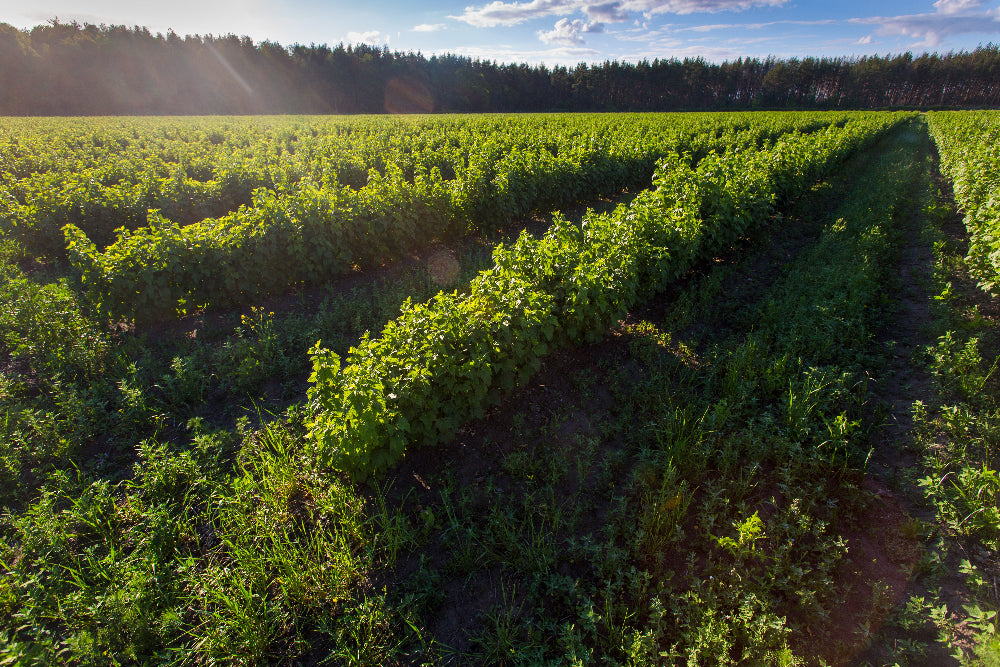
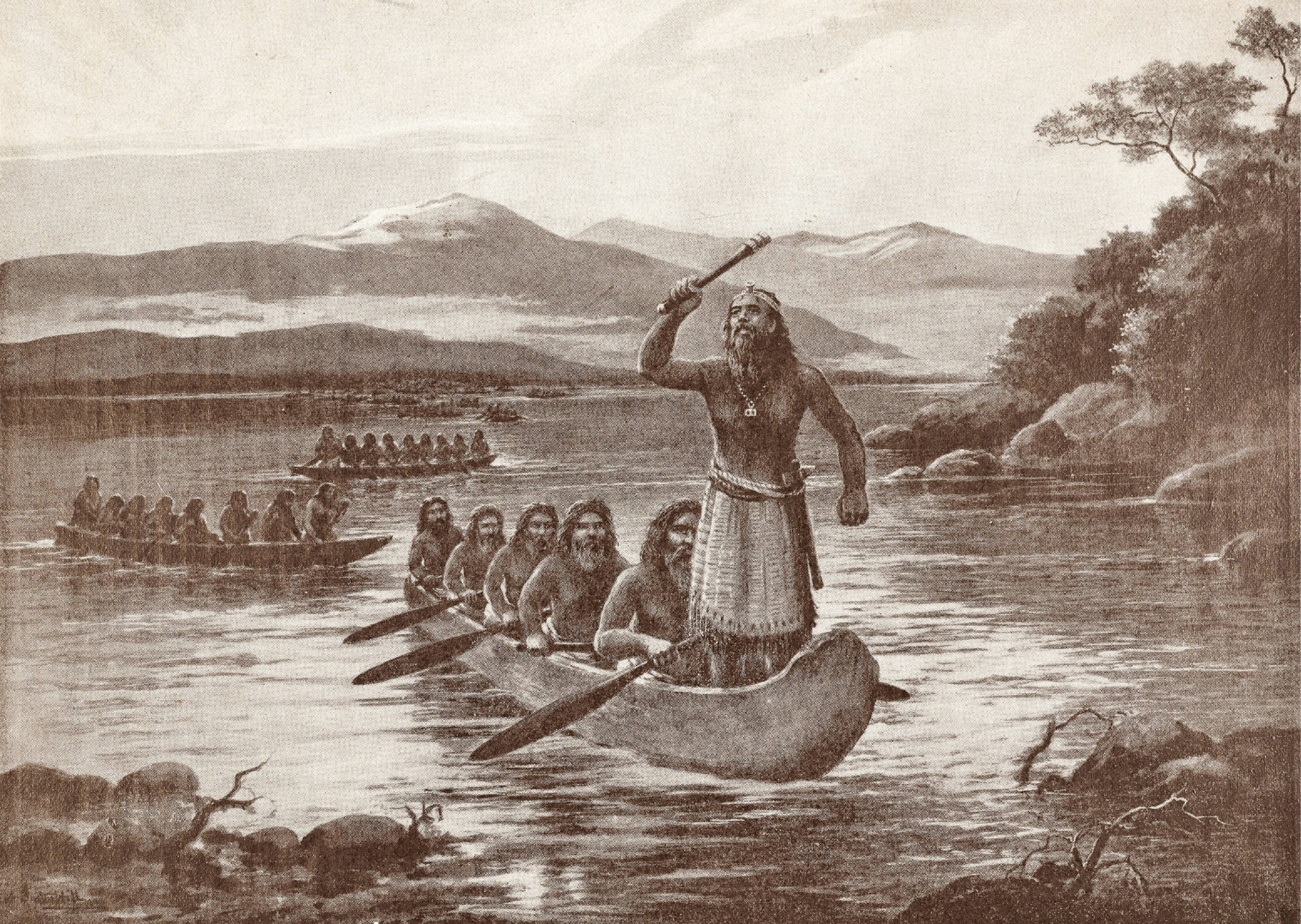
Honeyberries are believed to have originated in the cold regions of Siberia before spreading to northern Japan, including Hokkaido, where they were traditionally enjoyed by the indigenous Ainu people.
The Ainu referred to the berry as “haskap,” often translated as “many fruits on a branch.” Across Japan, Russia, and parts of Asia, the berry has a long cultural history of use in traditional foods and herbal practices. In Ainu culture, it was sometimes described as the “berry of long life,” reflecting its valued place in traditional diets and treatments.

Honeyberry’s Naturally Rich Composition
Haskap berries are known for their naturally high anthocyanin content — the plant pigments responsible for the deep purple, blue, and red colours found in many fruits and vegetables.
These compounds contribute to the berry’s intense colour and are part of a wider group of polyphenols commonly found in deeply coloured plant foods. Diets that include a variety of colourful fruits and berries are widely associated with balanced, healthy eating patterns.
Anthocyanins in the Diet
There is currently no officially established daily intake recommendation for anthocyanins. However, nutrition research consistently highlights the value of including a variety of colourful fruits and berries as part of a balanced diet and healthy lifestyle.
Naturally rich in anthocyanins and other polyphenols, honeyberries offer honeyberries offer a simple way to add a deeply coloured berry to everyday routines — whether in smoothies, yoghurt, oats, or other recipes.
How much anthocyanin do you need?
Although there is still no agreed daily intake value for anthocyanins, a recent review paper recommended that we eat 50mg anthocyanins per day for optimal benefit. Most people in northern European counties, including the UK consume much lower amounts. So, taking just one to two teaspoons of Haskap Berry Powder, each day will give you your daily anthocyanin boost.
Our product collection
-

Haskapa Superfood Berry Powder
shop powderAn easy-to-use powder with a naturally concentrated berry profile, blending easily into yoghurt, porridge, and smoothies.
-

Haskapa Organic Superfood Berry Powder
Shop organic powderOrganic version of our signature pure berry powder. This organic freeze-dried haskap berry powder is made with the whole berry and nothing else added.
-

The Haskapa Storage Jar
shop haskapa jarCrafted from unique violet-tinted glass, this jar is more than just stylish. Its special design blocks out harmful light and moisture, keeping your berry powder fresh and protected.


References
Click here to view references
Intensive lifestyle changes for reversal of
coronary heart disease (1999) D Ornish, L W
Scherwitz, J H
Billings, S E
Brown, K L
Gould, T A
Merritt, S
Sparler, W T
Armstrong, T A
Ports, R L
Kirkeeide, C
Hogeboom, R J
Brand. The
Journal of the American Medical Association, 281(15):1380 https://pubmed.ncbi.nlm.nih.gov/9863851/
·
Lifestyle Improvement
and the Reduced Risk of Cardiovascular Disease: The China-PAR Project (2023)
JIANG, Ying-Ying, et al. Journal of Geriatric Cardiology, 20(11) 779-787. https://pmc.ncbi.nlm.nih.gov/articles/PMC10716616/
·
Effect of Lifestyle
Intervention on Metabolic Coronary Heart Disease Risk Factors in Obese Older
Adults (2006) Villareal, Dennis T, et al. The American Journal of Clinical Nutrition, vol. 84 (6) https://doi.org/10.1093/ajcn/84.6.1317.
- High anthocyanin intake is associated
with a reduced risk of myocardial infarction in young and middle-aged
women. Cassidy A, Mukamal KJ, Liu L, Franz M, Eliassen AH, Rimm EB.
Circulation. 2013 Jan 15;127(2):188-96 - Habitual intake of anthocyanins and flavanones
and risk of cardiovascular disease in men. Cassidy A, Bertoia M, Chiuve S,
Flint A, Forman J, Rimm EB. Am J Clin Nutr 2016;104:587–94. - Habitual intake of flavonoid subclasses
and incident hypertension in adults. Cassidy A, O’Reilly ÉJ, Kay C,
Sampson L, Franz M, Forman JP, Curhan G, Rimm EB.Am J Clin Nutr. 2011
Feb;93(2):338-47. - Circulating Anthocyanin Metabolites
Mediate Vascular Benefits of Blueberries: Insights From Randomized
Controlled Trials, Metabolomics, and Nutrigenomics. Ana
Rodriguez-Mateos, Geoffrey Istas, Lisa Boschek, Rodrigo P
Feliciano, Charlotte E Mills, Céline Boby, Sergio Gomez-Alonso,
Dragan Milenkovic, Christian Heiss, The Journals of
Gerontology: Series A, Volume 74, Issue 7, July 2019, Pages 967–976, https://doi.org/10.1093/gerona/glz047 - Effects of Berry Anthocyanins on
Cognitive Performance, Vascular Function and Cardiometabolic Risk Markers:
A Systematic Review of Randomized Placebo-Controlled Intervention Studies
in Humans (2021) Int J Mol Sci. Ahles S, Joris PJ, Plat J. 1 Jun
17;22(12):6482. doi: 10.3390/ijms22126482. PMID: 34204250; PMCID:
PMC8234025. - A pilot dose–response study of the acute
effects of haskap berry extract (Lonicera caerulea) on cognition,
mood, and blood pressure in older adults. Bell, L. & Williams,
C.M. Eur JNutr (2018). https://doi.org/10.1007/s00394-018-1877-9 - Recent research on the health benefits of
blueberries and their anthocyanins. Wilhelmina Kalt, Aedin
Cassidy, Luke R Howard, Robert Krikorian, April J
Stull, Francois Tremblay, Raul Zamora-Ros. Advances in Nutrition,
nmz065, https://doi.org/10.1093/advances/nmz065 (Published: 22 July 2019) - Igwe, Ezinne & Charlton, Karen &
Probst, Yasmine. (2019). Usual dietary anthocyanin intake, sources and
their association with blood pressure in a representative sample of
Australian adults. Journal of Human Nutrition and Dietetics. 32.
10.1111/jhn.12647. - Dietary Flavonoid and Lignan Intake and
Mortality in Prospective Cohort Studies: Systematic Review and
Dose-Response Meta-Analysis. Grosso, Agnieszka Micek, Justyna Godos,
Andrzej Pajak, Salvatore Sciacca, Fabio Galvano, Edward L.
Giovannucci.American Journal of Epidemiology, Volume 185, Issue 12, 15
June 2017, Pages 1304–1316, https://doi.org/10.1093/aje/kww207 - Thompson, M. M. (2006). Introducing
haskap, Japanese blue honeysuckle. Journal of the American Pomological
Society, 60(4), 164–168