

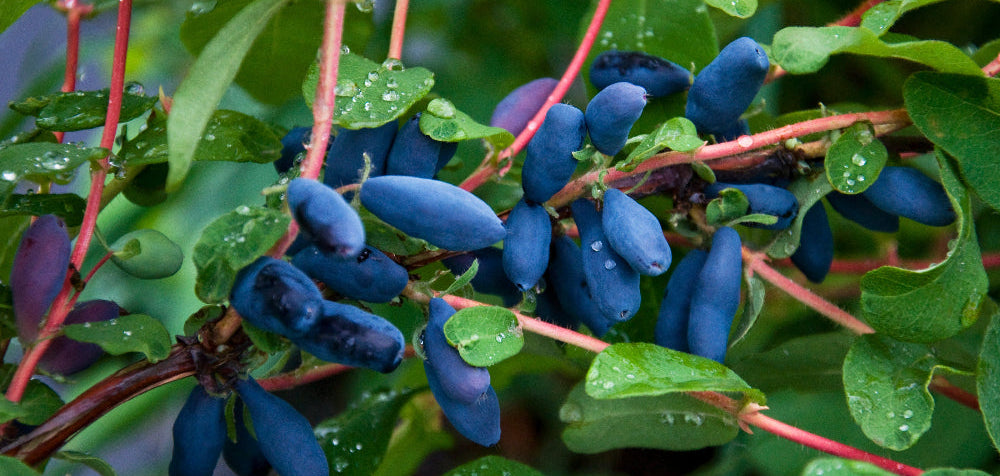
Haskapa (pronounced Has-cap-ah) is a pioneering superfood brand founded by Simon, a green entrepreneur, and Evie, a medical doctor. In 2010, they combined their passions for environmental sustainability and holistic health by cultivating haskap berries in Nova Scotia, Canada, and researching their nutritional properties. The result was Haskapa – the original haskap berry powder company, dedicated to making this powerful superberry available worldwide.
What are Haskap berries?
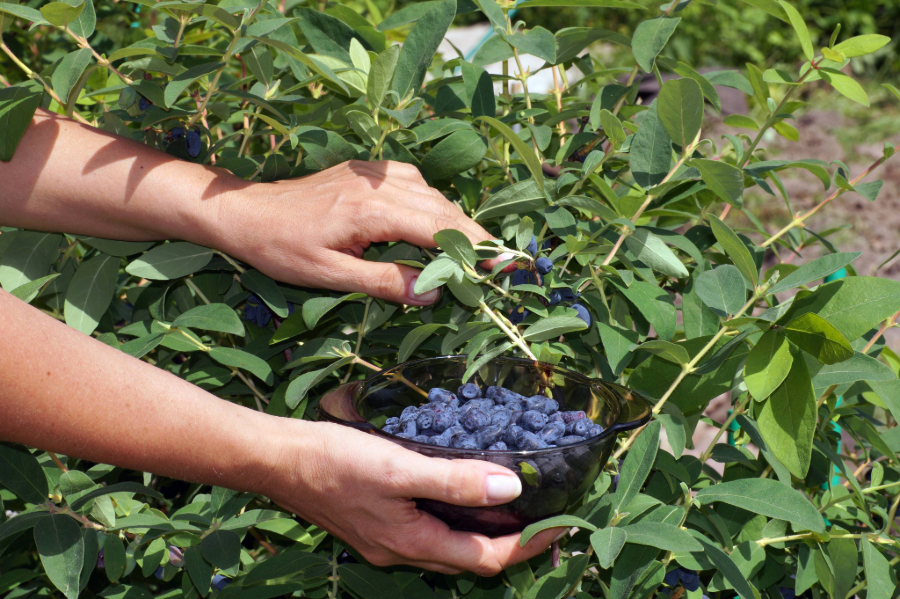
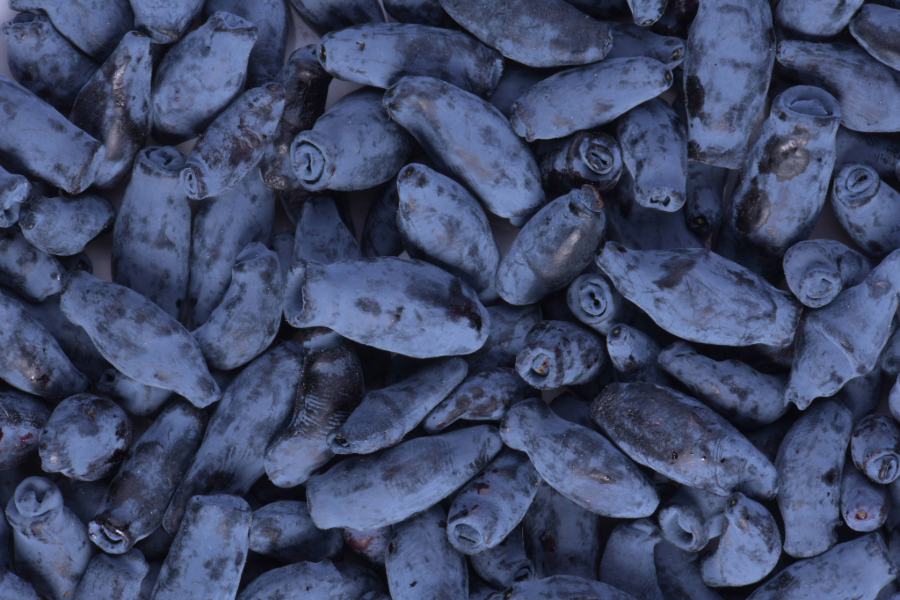
The haskap berry (Lonicera caerulea) is an edible blue honeysuckle native to northern regions of Canada, Japan, and Russia. These hardy berries thrive in extreme cold and are shaped like elongated blueberries, with deep purple-blue skins and vibrant crimson flesh. Known to be naturally antioxidant rich, haskap berries are gaining global attention as one of the most nutrient-dense berries on Earth.

Why is Haskap called the next superberry?
Haskap berries are naturally rich in anthocyanins — plant compounds that give many fruits and vegetables their deep blue‑purple colour. Laboratory analyses show that haskap berries contain three to four times more anthocyanins than blueberries, primarily the notable cyanidin‑3‑glucoside (C3G), which accounts for around 85% of their total anthocyanin content.
These naturally occurring antioxidants are currently being studied for their potential role in supporting overall wellbeing, particularly in relation to oxidative stress and healthy ageing.
Thanks to their anthocyanin rich content and vibrant nutrient profile, haskap berries are increasingly celebrated as one of the next generation superberries for balanced nutrition and everyday vitality.
What is Haskapa berry powder?
Haskapa Berry Powder is a freeze‑dried superfood powder made from 100% pure haskap berries. Each 100 g pouch contains the equivalent of around 800 whole berries, offering a naturally rich source of anthocyanins and polyphenols.
Our gentle freeze‑drying process helps preserve the berry’s natural colour, flavour, and nutrient composition — capturing haskap’s vibrant character in a convenient powdered form.
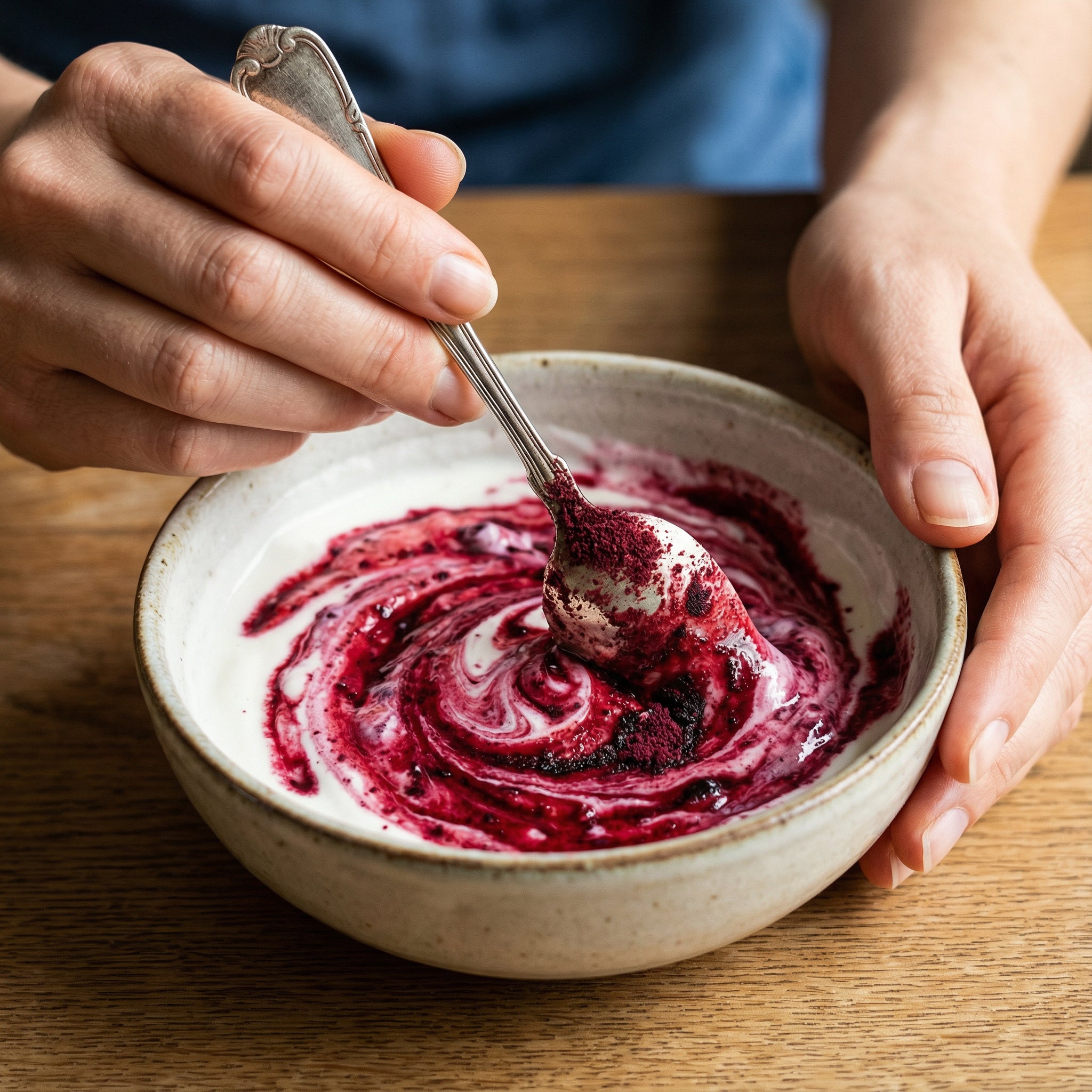
Perfect for blending into smoothies, yogurt, or breakfast bowls, Haskapa’s antioxidant‑rich powder is a simple way to add the colour and taste of haskap berries to your everyday diet. If you’re looking to buy haskap berry powder online, this is the only place to start.

What does it taste like?
Haskapa Berry Powder has a naturally bold, tangy-sweet flavour with hints of blueberry and blackcurrant. Its deep purple colour adds an eye catching “power of purple” boost to smoothies, breakfast bowls, yogurt, or even baking. It’s both delicious and nutritious—a simple way to elevate your diet with natural antioxidants.
How to use Haskapa powder:
- Add a teaspoon to smoothies, protein shakes, or porridge.
- Mix into yogurt, granola, or overnight oats for a colour and flavour boost.
- Use in baking, desserts, or pancake mixes for a naturally vivid colour.

Haskap berries and their nutritional properties
Emerging research on berries rich in anthocyanins and polyphenols—including the primary anthocyanin cyanidin‑3‑glucoside (C3G) found in haskap—indicates that these naturally occurring compounds may play a role in supporting overall wellbeing and protecting cells from oxidative stress.
Haskap berries are naturally high in these plant‑based antioxidants, which contribute to their deep purple colour and distinctive flavour. Scientists are exploring how such compounds may be linked to general areas of wellbeing, such as maintaining healthy cells and normal physiological processes.
At Haskapa, we’re dedicated to sharing the remarkable properties of the haskap berry by crafting a nutrient‑rich, 100% pure berry powder that makes it easy to enjoy this vibrant fruit as part of a balanced diet.
How Haskapa powder is made
Our Haskapa Berry Powder is made using berries from our own Nova Scotia farm and other trusted Canadian growers. We hand-harvest and gently freeze-dry the berries to preserve their natural antioxidant content, colour, and nutritional value—ensuring every spoonful delivers the full benefits of nature’s purple superberry.

References
Click here to view references
Intensive lifestyle changes for reversal of
coronary heart disease (1999) D Ornish, L W
Scherwitz, J H
Billings, S E
Brown, K L
Gould, T A
Merritt, S
Sparler, W T
Armstrong, T A
Ports, R L
Kirkeeide, C
Hogeboom, R J
Brand. The
Journal of the American Medical Association, 281(15):1380 https://pubmed.ncbi.nlm.nih.gov/9863851/
·
Lifestyle Improvement
and the Reduced Risk of Cardiovascular Disease: The China-PAR Project (2023)
JIANG, Ying-Ying, et al. Journal of Geriatric Cardiology, 20(11) 779-787. https://pmc.ncbi.nlm.nih.gov/articles/PMC10716616/
·
Effect of Lifestyle
Intervention on Metabolic Coronary Heart Disease Risk Factors in Obese Older
Adults (2006) Villareal, Dennis T, et al. The American Journal of Clinical Nutrition, vol. 84 (6) https://doi.org/10.1093/ajcn/84.6.1317.
- High anthocyanin intake is associated
with a reduced risk of myocardial infarction in young and middle-aged
women. Cassidy A, Mukamal KJ, Liu L, Franz M, Eliassen AH, Rimm EB.
Circulation. 2013 Jan 15;127(2):188-96 - Habitual intake of anthocyanins and flavanones
and risk of cardiovascular disease in men. Cassidy A, Bertoia M, Chiuve S,
Flint A, Forman J, Rimm EB. Am J Clin Nutr 2016;104:587–94. - Habitual intake of flavonoid subclasses
and incident hypertension in adults. Cassidy A, O’Reilly ÉJ, Kay C,
Sampson L, Franz M, Forman JP, Curhan G, Rimm EB.Am J Clin Nutr. 2011
Feb;93(2):338-47. - Circulating Anthocyanin Metabolites
Mediate Vascular Benefits of Blueberries: Insights From Randomized
Controlled Trials, Metabolomics, and Nutrigenomics. Ana
Rodriguez-Mateos, Geoffrey Istas, Lisa Boschek, Rodrigo P
Feliciano, Charlotte E Mills, Céline Boby, Sergio Gomez-Alonso,
Dragan Milenkovic, Christian Heiss, The Journals of
Gerontology: Series A, Volume 74, Issue 7, July 2019, Pages 967–976, https://doi.org/10.1093/gerona/glz047 - Effects of Berry Anthocyanins on
Cognitive Performance, Vascular Function and Cardiometabolic Risk Markers:
A Systematic Review of Randomized Placebo-Controlled Intervention Studies
in Humans (2021) Int J Mol Sci. Ahles S, Joris PJ, Plat J. 1 Jun
17;22(12):6482. doi: 10.3390/ijms22126482. PMID: 34204250; PMCID:
PMC8234025. - A pilot dose–response study of the acute
effects of haskap berry extract (Lonicera caerulea) on cognition,
mood, and blood pressure in older adults. Bell, L. & Williams,
C.M. Eur JNutr (2018). https://doi.org/10.1007/s00394-018-1877-9 - Recent research on the health benefits of
blueberries and their anthocyanins. Wilhelmina Kalt, Aedin
Cassidy, Luke R Howard, Robert Krikorian, April J
Stull, Francois Tremblay, Raul Zamora-Ros. Advances in Nutrition,
nmz065, https://doi.org/10.1093/advances/nmz065 (Published: 22 July 2019) - Igwe, Ezinne & Charlton, Karen &
Probst, Yasmine. (2019). Usual dietary anthocyanin intake, sources and
their association with blood pressure in a representative sample of
Australian adults. Journal of Human Nutrition and Dietetics. 32.
10.1111/jhn.12647. - Dietary Flavonoid and Lignan Intake and
Mortality in Prospective Cohort Studies: Systematic Review and
Dose-Response Meta-Analysis. Grosso, Agnieszka Micek, Justyna Godos,
Andrzej Pajak, Salvatore Sciacca, Fabio Galvano, Edward L.
Giovannucci.American Journal of Epidemiology, Volume 185, Issue 12, 15
June 2017, Pages 1304–1316, https://doi.org/10.1093/aje/kww207 - Thompson, M. M. (2006). Introducing
haskap, Japanese blue honeysuckle. Journal of the American Pomological
Society, 60(4), 164–168